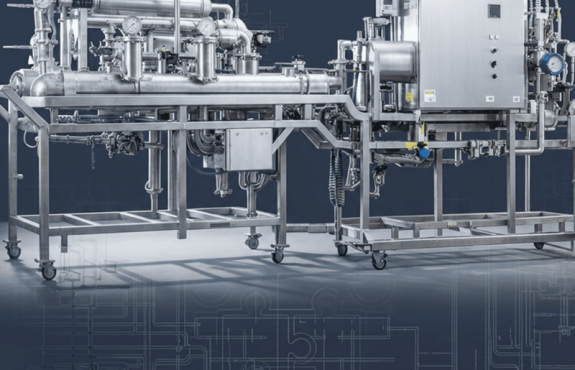
As GMP guidance evolves, pharmaceutical manufacturers need to consider qualification and validation requirements throughout the equipment lifecycle, from initial design and material selection through fabrication, documentation, testing, installation and commissioning. GMP requirements do not stop at the production process. The equipment used within pharmaceutical manufacturing also needs to be designed, documented, tested and qualified in a way that supports the intended process and its quality requirements. That is why qualification should not be something considered when a piece of equipment is almost finished. It should be part of the thinking from the beginning.
The European Medicines Agency (EMA) is currently working on a revision of EU GMP Annex 15 – Qualification and Validation. The revision is intended to update the guidance and, among other things, consider changes to quality risk management and extend its scope to active substance manufacturers. The consultation on the proposed revision closed in April 2026, with the EMA’s current work programme targeting completion of the amended Annex 15 in Q4 2026.
The current Annex 15 has been in operation since October 2015.
For pharmaceutical manufacturers, the important point is not simply that a guidance document is being revised. It is that qualification and validation need to be considered alongside engineering and equipment design, rather than treated as a separate activity at the end of a project.
What does GMP qualification mean for pharmaceutical equipment?
Qualification is the documented process of demonstrating that equipment, systems or facilities are suitable for their intended use. The exact qualification strategy will depend on the equipment, process and risk involved.
But the principle is straightforward: the manufacturer needs appropriate evidence that the equipment can perform as intended and that the critical aspects affecting product quality are controlled. That means the engineering decisions made during design can have a direct impact on what is required later.
- The materials selected.
- The instrumentation used.
- The way components are identified.
- The accessibility of equipment.
- The ability to inspect and maintain it.
- The information captured during fabrication.
- The testing carried out before delivery.
All of these can become relevant when the equipment moves into qualification.
Qualification should influence design, not follow it
One of the problems with treating qualification as an end-of-project activity is that some decisions become much harder to change later.
Imagine, for example, that a particular measurement needs to be verified as part of the customer’s qualification process. If the instrumentation, connection arrangement or documentation required to support that verification was considered from the start, it can be incorporated into the design.
If it is only identified when the equipment is already fabricated, the options may be much more limited.
The same principle applies to documentation and traceability. If you know from the outset what information will be required, it can be captured as the project progresses. Trying to reconstruct it at the end is a very different exercise.
The easiest qualification problem to solve is often the one that was considered during design.
The equipment lifecycle starts with design
The project lifecycle does not begin when fabrication starts. It begins with design.
For pharmaceutical equipment, decisions made during design can influence everything that follows, from material selection and instrumentation through fabrication, testing, installation and commissioning.
A typical project lifecycle may be viewed as:
Design to Fabrication to FAT to Installation to SAT to Commissioning.
Each stage builds on the one before it.
Design establishes what the equipment needs to achieve and how it will be constructed. Fabrication turns that design into the physical equipment. FAT provides an opportunity to verify agreed requirements before the equipment leaves the workshop. Installation brings the equipment into its intended environment, followed by SAT and commissioning to confirm that it performs as required on site.
This is why qualification, documentation and traceability need to be considered from the design stage rather than added at the end. Decisions made early can affect what needs to be documented, tested and demonstrated later in the project.
The exact lifecycle will vary depending on the equipment and project requirements, but the principle remains the same: each stage needs to connect to the next.
Documentation is part of the equipment delivery
In a pharmaceutical environment, the physical equipment is only part of the deliverable. The supporting documentation matters too.
Depending on the project, this may include information relating to:
- Materials and material certificates
- Component identification
- Instrumentation
- Welds and fabrication records
- Calibration
- Inspection and testing
- Design information
- Factory Acceptance Testing (FAT)
- Site Acceptance Testing (SAT)
- Commissioning
- Traceability
- Operating and maintenance information
The exact documentation package will depend on the project requirements. The important point is that documentation should be considered during the project rather than assembled as an afterthought. A well-managed documentation trail makes it easier for the customer to demonstrate what was specified, what was supplied and what testing was completed.
Traceability matters
Traceability is another area where engineering decisions made early can have an impact later.
In regulated manufacturing environments, being able to identify what materials, components and processes were used can be important to demonstrating control. That means traceability needs to be managed through the project.
For fabricated pharmaceutical equipment, this can involve maintaining appropriate records relating to materials, components, fabrication and inspection. Again, the specific requirements depend on the equipment and customer’s quality system.
But the principle remains the same:
If information may be needed later, it needs to be captured properly when the work is being done.
FAT is more than a final check
Factory Acceptance Testing is another important part of the connection between engineering and qualification. FAT provides an opportunity to test equipment before it leaves the manufacturing environment and to demonstrate that agreed requirements have been met. It can also identify issues before the equipment reaches site. That matters because resolving a problem in a controlled workshop environment is generally very different from discovering it during installation or commissioning. The FAT protocol and acceptance criteria should therefore be considered as part of the wider project requirements. The objective is not simply to “test the equipment”. It is to demonstrate that the equipment performs against the agreed requirements and to generate appropriate evidence for the next stage of the project.
SAT and commissioning continue the process
The same thinking applies when equipment reaches site.
Site Acceptance Testing and commissioning provide opportunities to confirm that the equipment has been installed correctly and operates as intended within its actual environment. Site conditions can be different from the controlled environment of a workshop. Connections, services, interfaces and surrounding equipment all become part of the picture. That is why the relationship between design, fabrication, FAT, installation, SAT and commissioning matters. They are not completely separate activities. They are stages in the same equipment lifecycle.
Risk should be considered early
The current revision of Annex 15 is also being developed in the context of the revised ICH Q9 approach to quality risk management. The EMA has specifically identified consideration of ICH Q9(R1) as part of the Annex 15 revision. For engineering teams, the practical lesson is not that every piece of equipment requires the same level of documentation or testing.
It is the opposite.
The level of qualification and verification should be appropriate to the equipment, its intended use and the risks associated with it. That makes early conversations important.
- What is the equipment being used for?
- Which parameters are critical?
- What needs to be controlled or monitored?
- What evidence will the customer need?
- What needs to be tested before the equipment leaves the workshop?
- What needs to be confirmed once it reaches site?
Answering those questions early can help prevent unnecessary work later.
What should pharmaceutical manufacturers look for in an equipment supplier?
When selecting an engineering partner for pharmaceutical equipment, it is worth looking beyond fabrication capability. Consider whether the supplier understands the environment the equipment will operate in.
- Can they work from P&IDs and customer specifications?
- Can they manage the mechanical integration of equipment, pipework, instrumentation and supporting systems?
- Can they maintain appropriate documentation and traceability throughout fabrication?
- Can they support FAT?
- Do they understand the requirements around installation and commissioning?
- Can they work effectively with the customer’s engineering, quality and validation teams?
The answers to these questions can tell you considerably more about a supplier’s suitability for a regulated project than fabrication capability alone.
GMP compliance starts with good engineering
It is important to be clear about the role of an equipment engineering company. The equipment supplier does not determine the customer’s overall GMP validation strategy. That sits within the pharmaceutical manufacturer’s quality and validation framework. But the equipment and the engineering decisions made during its design and manufacture form part of the evidence and controls that the customer may need to work with. That is why engineering, documentation, testing and qualification cannot be treated as completely separate activities.
They need to connect.
What does this mean for Premech?
At Premech, pharmaceutical engineering projects are about more than fabricating equipment. The work involves bringing together the mechanical elements of a system, from P&IDs, vendor information and instrumentation through pipework, frame design and equipment integration, and delivering an engineered solution that is suitable for its intended application.
That means considering the wider project requirements throughout the full equipment lifecycle:
Design to Fabrication to FAT to Installation to SAT to Commissioning
Documentation, traceability and testing are not treated as separate activities to be dealt with at the end. They form part of the project from the outset, alongside the design, engineering and fabrication work.
The objective is to make sure the requirements of each stage are understood before the project moves to the next.
Because qualification should not be something you try to do to equipment after it has been designed.
It should influence how the equipment is designed in the first place.
Frequently Asked Questions
What is Annex 15 in pharmaceutical manufacturing?
EU GMP Annex 15 sets out principles for the qualification and validation of facilities, equipment, utilities and processes used in pharmaceutical manufacturing. The current Annex 15 has been in operation since 1 October 2015.
Is EU GMP Annex 15 changing?
Yes. The EMA and PIC/S are currently working on a revision of Annex 15. A concept paper was published in January 2026 and the public consultation closed in April 2026. The EMA’s current work programme targets completion of the amended guidance in Q4 2026.
Why does equipment design matter for qualification?
Equipment design decisions can affect how easily the equipment can be tested, documented, inspected and demonstrated as suitable for its intended use. Considering qualification requirements during design can help avoid changes or missing information later in the project.
What documentation is important for pharmaceutical equipment?
The requirements depend on the equipment and project, but documentation can include material certificates, component information, fabrication records, inspection and testing records, calibration information, FAT/SAT documentation and commissioning records.
What is the difference between FAT and SAT?
Factory Acceptance Testing (FAT) is generally carried out before equipment leaves the supplier’s facility to verify agreed requirements. Site Acceptance Testing (SAT) takes place after installation at the customer’s site and helps verify that the equipment performs as required in its installed environment.
Does an equipment supplier carry out pharmaceutical equipment qualification?
The precise qualification responsibilities depend on the project and the customer’s validation strategy. An equipment supplier can, however, provide engineering documentation, testing evidence and technical support that form part of the customer’s overall qualification and validation activities.
Lets Talk
Planning a pharmaceutical equipment project? Talk to Premech about your requirements for process skids, bespoke machinery, sampling systems and pharmaceutical engineering solutions.